Dreamlog
A dream journal designed for 3 a.m.
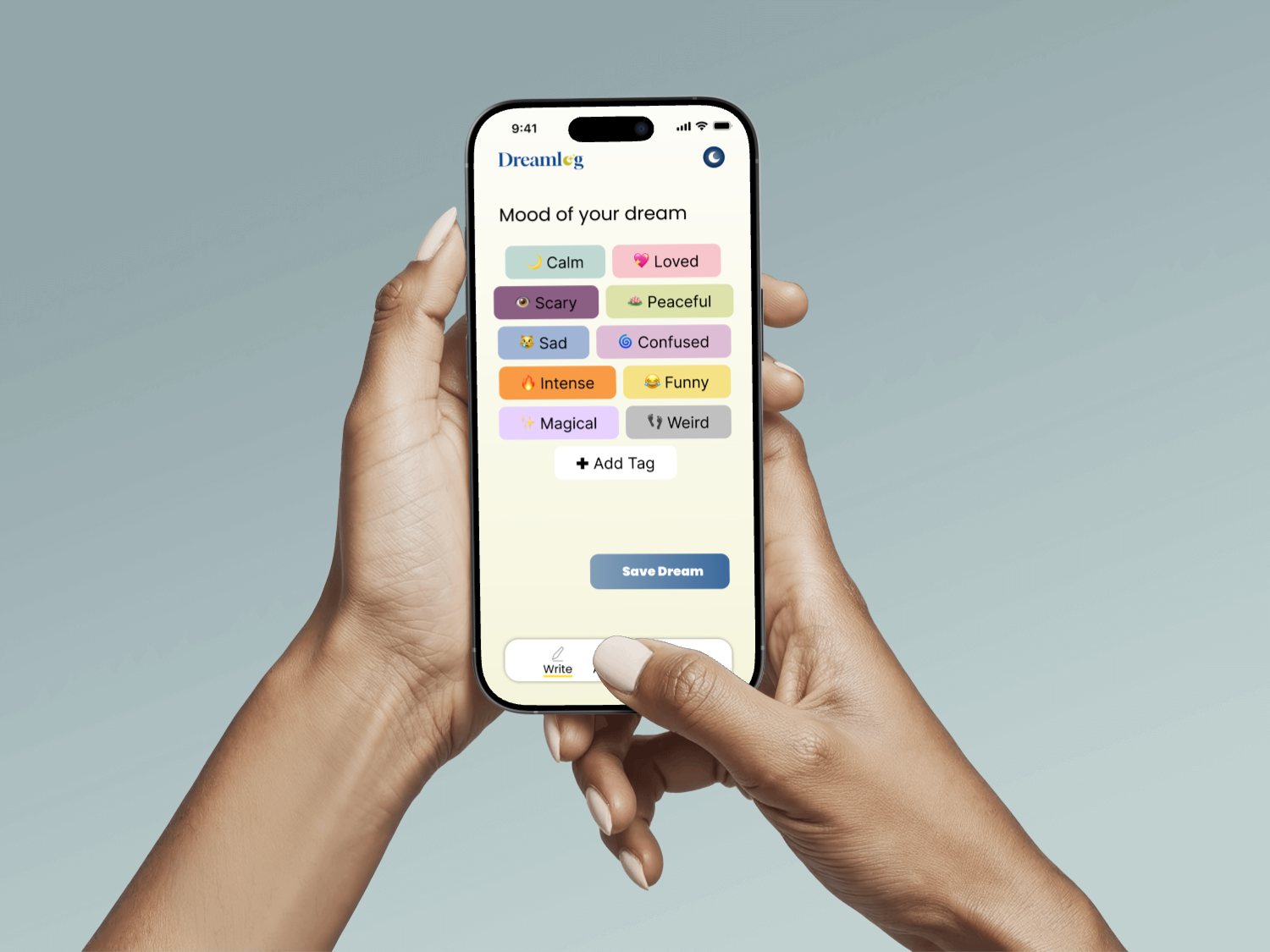
Overview
Dreamlog is a dream journal designed for the strange half-awake moment it actually gets used in. Over three weeks I designed the full product in Figma — from lo-fi wireframes through a complete UI in two full themes, plus branding (wordmark, logo vectors, app icon) and device mockups.
The problem
Dream journaling has a brutal context: users are groggy, it’s dark, motor skills are at their worst, and memories evaporate in minutes. Most journaling apps ignore this and open with a blank page on a bright white screen. The design question: how do you capture something fleeting when the user is barely awake?
Wireframes first
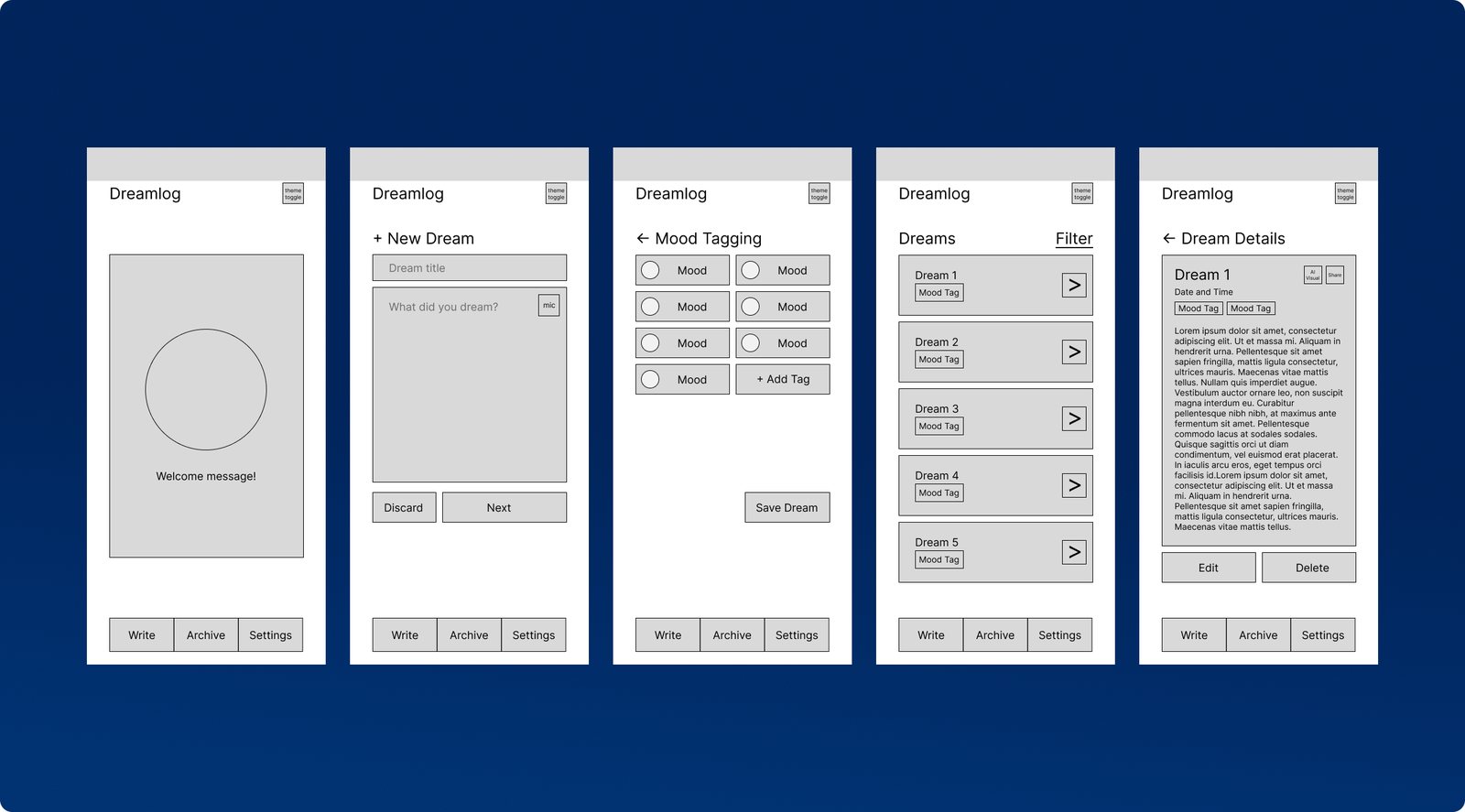
I blocked out the entire app as lo-fi wireframes before touching visual design: welcome, new dream, mood tagging, the dream list, and dream details — all hanging off a three-item nav (Write, Archive, Settings). Locking the bones early meant the UI phase was about feel, not structure.
The design
The five screens are built around gentleness:
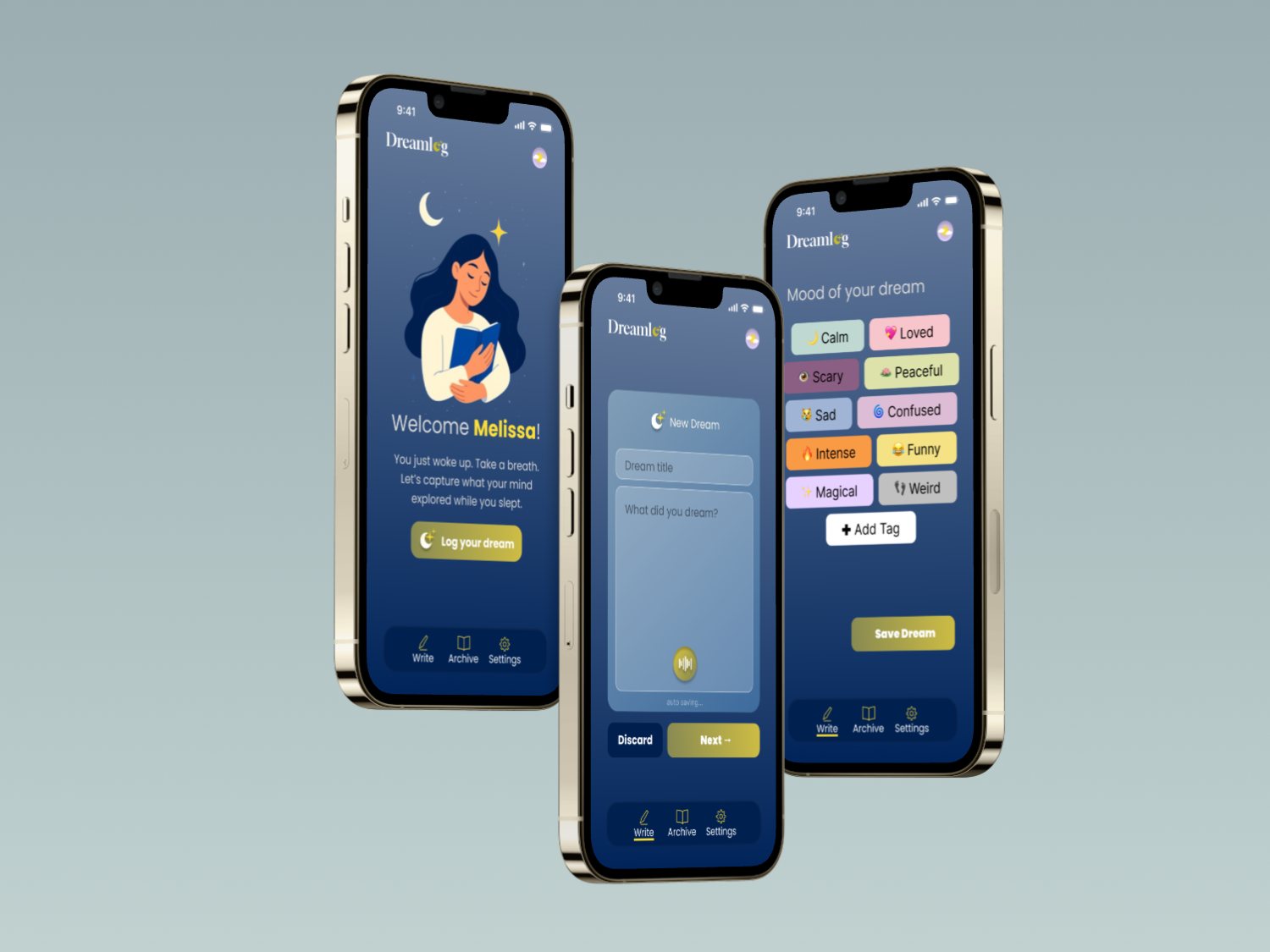
- A welcome that knows the moment — “Welcome Melissa! You just woke up. Take a breath. Let’s capture what your mind explored while you slept.” One warm illustration, one big action: Log your dream.
- Capture with zero friction — a title, a free-text field, and voice input as a first-class control, because thumbs barely work at 3 a.m. Discard and Next are the only decisions.
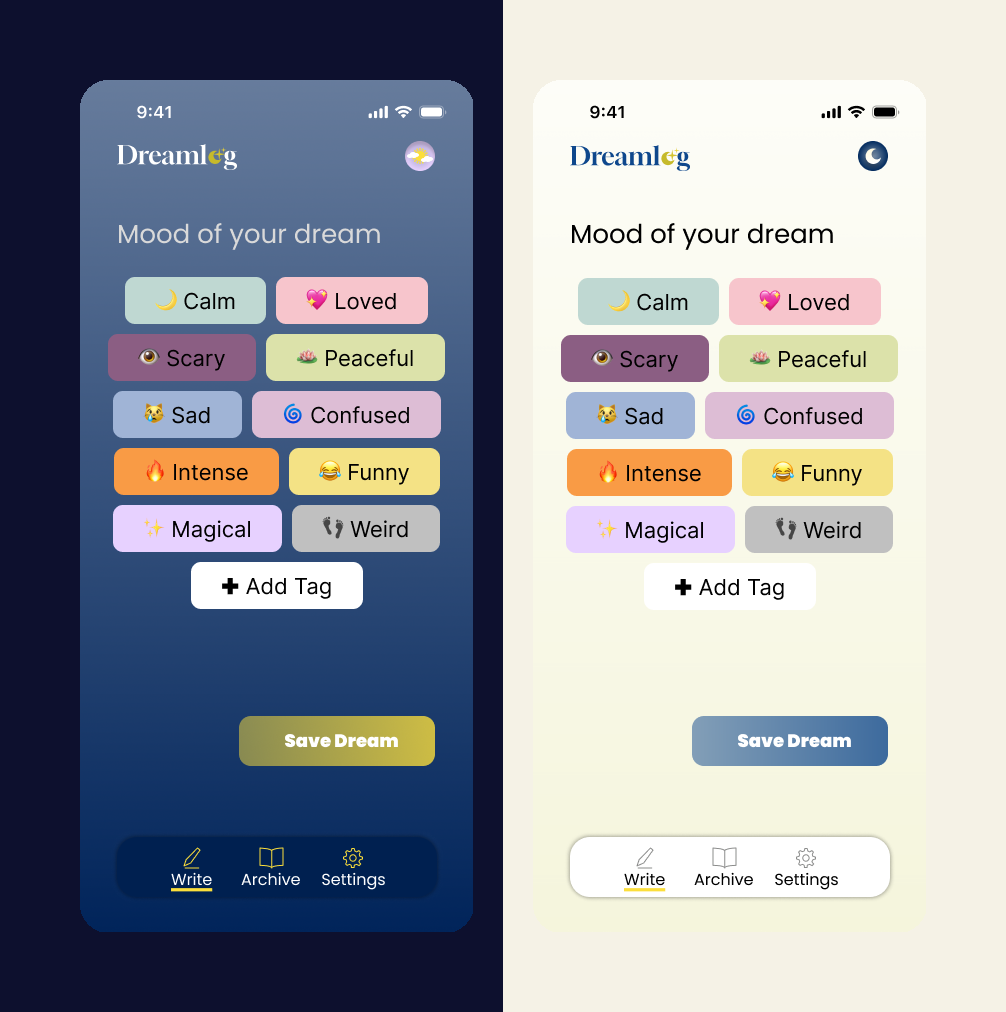
- Mood tagging as an emotional palette — ten emoji-led chips (Calm, Loved, Scary, Peaceful, Sad, Confused, Intense, Funny, Magical, Weird) plus custom tags, applied after capture so organizing never blocks recording.
- An archive built for pattern-spotting — every dream card carries its mood chips, and the list filters by them, so “do I only have scary dreams on Sundays?” is an actual query.
Two themes, one system
Dreamlog ships light and dark — not as an afterthought but as the core design decision. The dark theme is twilight indigo with lavender and starlight accents, tuned for a bedside phone at night; the light theme is warm cream for morning re-reading. Every screen exists in both, built on shared components, with a warm yellow CTA that survives both contexts.
Outcome & reflection
The final file is a complete, presentation-ready product: wireframes, ten hi-fi screens across two themes, branding, and device mockups. Dreamlog is the most opinionated project in my portfolio — it taught me that “delight” isn’t decoration. It’s the moment an interface respects the state you’re actually in.